
China’s power infrastructure depends on stable direct-current protection, control, and communication systems. This article introduces the China Top 10 Power Utilities DC Systems Manufacturers, focusing on companies serving substations, generating plants, industrial facilities, and grid automation projects. Their products commonly include battery chargers, DC distribution panels, monitoring units, and valve-regulated or lithium battery solutions.
A practical starting point.
The selection considers engineering experience, product reliability, certification records, manufacturing capacity, and documented project performance. We also examine how each manufacturer handles common utility requirements, including 110V or 220V DC output, redundant charger operation, insulation monitoring, battery autonomy, and remote alarms. These details matter during a blackout, when a protection relay may have only seconds to operate correctly. A strong supplier should also provide commissioning guidance, maintenance support, clear manuals, and spare-part access.
Public information does not always reveal complete field performance. That limitation deserves attention. Therefore, this overview should support supplier research rather than replace factory audits, technical clarification, or site acceptance testing. Buyers should verify short-circuit capacity, temperature tolerance, communication protocols, enclosure protection, and compliance with applicable IEC, national, and utility standards. They should also compare lifecycle costs, not only the initial quotation.
The manufacturers discussed here represent different strengths, such as customization, delivery capability, digital supervision, or experience with large substations. Some may appear less impressive on paper but perform steadily in demanding environments. That possibility should not be ignored. By comparing evidence carefully, readers can identify Power Utilities DC Systems partners that match their voltage class, project scale, operating conditions, and long-term reliability goals.
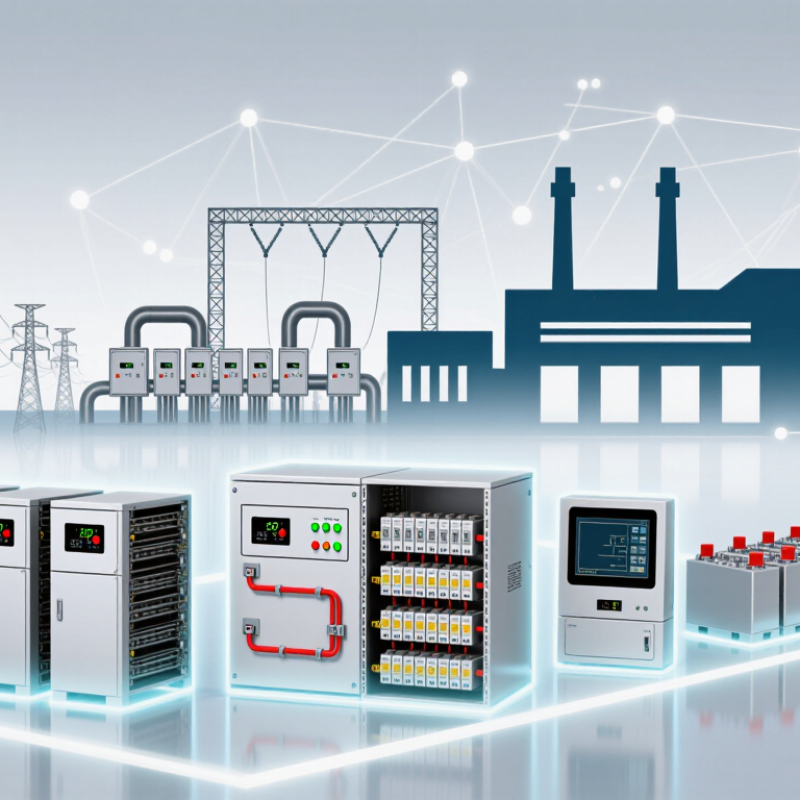
China’s Top 10 Power Utilities DC Systems Manufacturers: Ranking Scope
This ranking focuses on manufacturers that design and supply DC systems for China’s power utilities. The scope covers substation protection, control, communication, and emergency power applications. Eligible companies should provide integrated chargers, battery banks, monitoring units, and related technical services. Product catalogs alone are not enough. Real engineering performance matters.
The assessment considers operating experience, product reliability, safety design, and service coverage. Evidence may include utility projects, factory testing records, maintenance feedback, and documented quality systems. We also examine support for common 110V and 220V DC configurations. Response time matters during faults. So does the clarity of technical documentation.
The ranking does not simply reward sales volume. It weighs delivery consistency, lifecycle support, testing capability, and adaptation to different grid conditions. Manufacturers with strong domestic project experience may receive greater attention. However, public information is often incomplete. That creates uncertainty. A company’s performance can also vary by project team, region, and commissioning quality. These limits should be recognized when reading the results. The list is therefore a practical market comparison, not an absolute judgment of every product or installation.
Scope and evaluation framework for comparing manufacturers of stationary DC power systems used by electric power utilities.
| No. | Scope Dimension | Included Data or Definition | Evaluation Relevance |
|---|---|---|---|
| 1 | Geographic Coverage | Manufacturers headquartered in Mainland China, including suppliers serving transmission, distribution, generation, and grid-support facilities. | Defines the national supplier universe and separates domestic manufacturing capability from imported equipment distribution. |
| 2 | Product Definition | Stationary DC systems comprising a rectifier or charger, DC distribution equipment, batteries, monitoring functions, protection, and associated cabinets or enclosures. | Prevents comparison with unrelated UPS products, portable power supplies, or general-purpose battery packs. |
| 3 | Typical DC Voltage Classes | Utility applications commonly use nominal 24 V, 48 V, 110 V, 220 V, and 240 V DC systems, subject to project specifications and local standards. | Measures whether a supplier can cover substation, control, protection, communications, and plant auxiliary requirements. |
| 4 | System Architecture | Evaluation includes modular and distributed rectifiers, dual input arrangements, redundant charger configurations, independent battery banks, and sectionalized DC distribution. | Shows the supplier’s ability to support availability, maintainability, and fault isolation requirements. |
| 5 | Battery Technology Coverage | Eligible solutions may support valve-regulated lead-acid, flooded lead-acid, nickel-cadmium, and lithium-ion battery configurations, where permitted by the project specification. | Reflects application flexibility, lifecycle options, installation constraints, and backup-duration requirements. |
| 6 | Electrical Performance | Key indicators include charger efficiency, output-voltage regulation, current-sharing capability, ripple performance, short-circuit protection, and battery charging control. | Determines power quality, battery health, equipment compatibility, and operational stability. |
| 7 | Reliability and Redundancy | Assessment covers N+1 rectifier redundancy, dual-bus or dual-bank arrangements, bypass functions, alarm availability, maintainability, and documented failure-handling procedures. | Critical DC loads must remain available during component failure, maintenance, or loss of an incoming AC source. |
| 8 | Monitoring and Communications | Included functions may comprise local display, event and alarm recording, battery testing, insulation monitoring, remote I/O, and communication interfaces such as RS-485, Ethernet, Modbus, or IEC-based substation protocols. | Indicates readiness for centralized asset monitoring, condition-based maintenance, and substation automation. |
| 9 | Compliance and Testing | Relevant evaluation references include IEC 62477-1, IEC 60664-1, IEC 60364 principles, IEEE 946 guidance, EN 50171 where applicable, electromagnetic-compatibility testing, and project-specific Chinese standards. | Confirms electrical safety, insulation coordination, EMC performance, documentation quality, and acceptance-test readiness. |
| 10 | Ranking Evidence and Service | Comparison should consider verified utility references, installed capacity or project count, manufacturing capability, delivery coverage, commissioning support, spare parts, warranty terms, and after-sales service within the review period. | Balances technical capability with proven deployment, supply continuity, and long-term support for utility operators. |
A 110 V system suits many control and medium-voltage applications. A 220 V system reduces current across long cables and large breaker mechanisms. Check relay ratings, insulation levels, and voltage drop before choosing.
A typical system includes batteries, chargers, distribution panels, monitoring units, and protective fuses. These parts support protection, control, communication, and emergency switching.
Lead-acid batteries offer familiar maintenance routines and lower initial cost. Lithium-based batteries save weight and floor space. They require stronger thermal monitoring and isolation planning. Neither choice is automatically better.
Dual chargers can share the load and maintain the battery bank during maintenance. They also improve availability after one charger fails. The design still needs verified alarms and transfer behavior.
Verify floating charge, equalization settings, ripple limits, and end-of-discharge voltage. Confirm charger output under realistic load. Small setting errors can shorten battery life or trigger false alarms.
Measure charger output, battery internal resistance, alarm contacts, and bus voltage. Test AC input loss, charger failure, earth faults, and simultaneous trip commands. Test it under realistic load.
Review voltage stability, alarm accuracy, battery autonomy, module-failure recovery, and maintenance access. Compare efficiency at 25%, 50%, and 100% load. Request field failure data, witnessed load tests, and battery discharge records.
Check local technician coverage, remote diagnostics, training, spare parts, and documented response times. Inspect cabinets, cable labels, and expansion space. A tidy scorecard can still miss regional power quality and technician skill.
Drawings cannot reveal every installation weakness. Future feeders may have too little capacity, and poor labeling can delay outage work. Factory testing helps, but site acceptance testing proves actual performance. Some assumptions need rechecking.
This article presents a structured overview of China’s top manufacturers of Power Utilities DC Systems, focusing on the technologies, capabilities, and market factors that define reliable utility power solutions. It explains the main system types, including 110 V and 220 V DC configurations, battery banks, chargers, monitoring units, and integrated architectures designed for substations, power plants, and other critical facilities.
The comparison examines output reliability, energy efficiency, capacity, lifecycle support, customization, and service coverage. Each manufacturer profile is assessed through its product range, engineering capabilities, applicable standards, project experience, and approach to system integration. The article also introduces a practical evaluation framework based on IEC 62040, IEEE 946, and GB/T 19826 criteria, helping readers understand how safety, performance, maintainability, and operational continuity influence purchasing decisions. By combining technical analysis with market-oriented comparisons, the article supports a clearer assessment of DC system suppliers for demanding power utility applications.