Choosing the right Defence Power Supply Systems requires more than comparing wattage, price, or brand reputation. These systems must deliver stable energy under vibration, temperature changes, moisture, electromagnetic interference, and sudden load shifts. A dependable design keeps communications, surveillance, and support equipment available when ordinary commercial units may fail. Reliability matters most.
Experienced engineering teams begin with the operating environment. They examine input instability, required voltage tolerance, peak demand, battery autonomy, cooling capacity, and maintenance access. Redundant modules can reduce a single point of failure, while monitored battery systems provide valuable warning before capacity declines. Physical details matter too, including sealed connectors, reinforced cabinets, clear cable routing, and practical inspection space.
Compliance evidence should support every major claim. Independent testing, traceable manufacturing records, environmental qualification, and documented service procedures offer stronger assurance than marketing language. Suppliers should explain failure rates, repair times, spare-part availability, and software support throughout the expected lifecycle. A datasheet is not proof.
Field experience often reveals weaknesses that laboratory tests miss. Dust may block filters. A small connector fault can interrupt an entire power chain. These risks deserve honest assessment, not optimistic assumptions. No selection method is perfect, and project teams should revisit their requirements after site surveys, prototype testing, and operator feedback. The best Defence Power Supply Systems balance resilience, efficiency, maintainability, and verified performance without adding unnecessary complexity.
Define Defence Power Supply Requirements and Operating Conditions
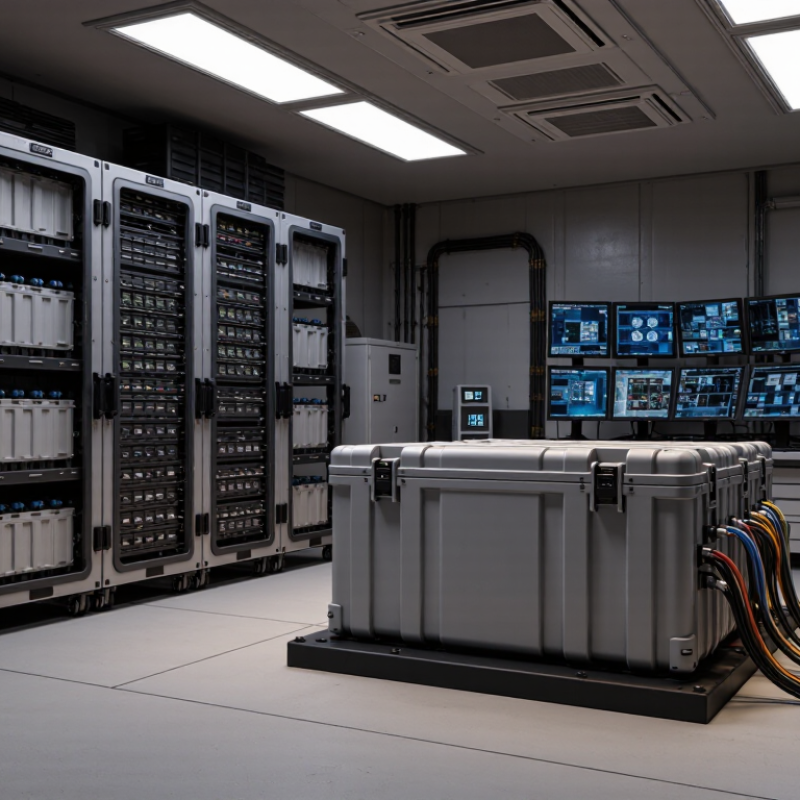
Choosing the best defence power supply begins with a precise definition of requirements and operating conditions. A system may face unstable grids, mobile deployment, extreme temperatures, vibration, humidity, and electromagnetic interference. Define normal, peak, emergency, and future loads separately. Include motor-starting currents and sensitive electronic equipment.
MIL-STD-704F provides useful guidance for aircraft electrical power characteristics, while IEC 60068 supports environmental testing methods. These references should guide the specification, not replace field validation. The Uptime Institute’s 2023 Global Data Center Survey reported that 60% of respondents experienced an outage costing over $100,000. Defence failures can create wider operational consequences. Therefore, designers should verify voltage tolerance, frequency stability, battery autonomy, transfer time, grounding, cooling, and maintenance access. Redundancy also requires careful load separation. Two units sharing one weak distribution path are not truly independent.
Tips:
Build a realistic load profile from measured equipment data. Test the power system with a load bank under hot and cold conditions. Simulate generator failure, battery aging, cable faults, and sudden load changes. Keep records that an independent engineer can review. Do not assume the largest battery always provides the best protection. It may increase weight, heat, and maintenance demands. That assumption deserves challenge. A practical design often balances resilience, portability, efficiency, and repair time. Field experience shows that small installation details, such as connector sealing and airflow, can undermine excellent calculations.
Compare Power Supply Technologies for Defence Applications
How to Choose the Best Defence Power Supply Systems?
Compare Power Supply Technologies for Defence Applications
Defence power systems must survive vibration, dust, humidity, and unstable field conditions. The U.S. Department of Defense Operational Energy Strategy, 2022, reports that operational energy represents about 75% of total defence energy use. This makes conversion efficiency a mission concern, not merely an electrical specification. Traditional transformer-based supplies offer proven isolation and strong overload tolerance. However, they are heavier and less adaptable than modern switch-mode designs.
Modular switch-mode supplies provide higher power density and easier replacement. They can also support N+1 redundancy, allowing one module to fail without shutting down critical equipment. Their weakness is electromagnetic interference. Engineers should verify compliance with MIL-STD-461 requirements and test performance under MIL-STD-810 environmental conditions. A clean laboratory result is not enough. Cable routing can still create trouble inside a crowded vehicle.
Battery-assisted systems are becoming more practical. The International Energy Agency’s Global EV Outlook 2024 reports that global lithium-ion battery demand reached approximately 750 GWh in 2023, increasing by 40% from 2022. This figure is not defence-specific, but it signals faster progress in energy storage. Lithium-based storage offers quiet operation and rapid response, while fuel-based generators provide longer endurance and easier refuelling. Hybrid architectures often balance both strengths. Yet battery performance declines in extreme cold, and thermal management adds weight. The best choice depends on duty cycle, repair access, acoustic limits, and the cost of failure.
How to Choose the Best Defence Power Supply Systems?
Representative peak efficiency of isolated DC power conversion technologies used in defence electronics
Higher efficiency can reduce heat generation, cooling-system size and thermal stress. Linear regulation is simple but inefficient at high voltage drops, while soft-switching and wide-bandgap designs generally provide better efficiency and power density. Final selection should also consider input range, electromagnetic compatibility, shock and vibration, radiation tolerance, redundancy and maintainability.
Assess Reliability, Redundancy, and Fault-Tolerance Features
How to Choose the Best Defence Power Supply Systems?
Reliability begins with evidence, not impressive specifications. The Uptime Institute’s 2023 Annual Outage Analysis found that 66% of outages were preventable. This finding matters for defence facilities. A power system should withstand heat, vibration, dust, and sudden load changes. Review measured MTBF, repair history, thermal performance, and tested operating limits. Ask for test records, not only laboratory claims. A cabinet may look protected, yet a loose terminal can disable an entire load.
Redundancy must prevent one failure from becoming a mission failure. Compare N+1, 2N, and distributed redundant architectures carefully. N+1 can maintain service after one module fails. However, shared switchgear may still create a single point of failure. Use separate power paths, independent battery strings, and physically divided cable routes. The Ponemon Institute’s 2022 Cost of Data Center Outages study reported an average outage cost of 740,357 US dollars. Defence consequences can extend beyond financial loss. They may affect communications, surveillance, or emergency response.
Fault tolerance requires practical testing. Simulate a failed rectifier, shorted battery string, blocked cooling fan, and transfer-switch malfunction. Observe the system under real load. Measure transfer time, voltage recovery, alarm accuracy, and safe shutdown behavior. IEEE 493 recommends quantitative reliability analysis for critical power systems. Still, calculations can miss human mistakes. Maintenance access may be awkward. Procedures may be unclear. Design reviews should include technicians who will operate the system at 2 a.m. Redundancy is not magic. It needs disciplined inspection, documented drills, and honest reassessment.
Evaluate Security, Environmental Resistance, and Compliance
Choosing a defence power supply system requires more than checking wattage. Security begins with controlled access, tamper detection, encrypted monitoring, and separated control networks. The IBM Cost of a Data Breach Report 2024 placed the global average breach cost at US$4.88 million. That figure supports stronger protection for power-management interfaces, not only mission computers.
Environmental resistance must match the actual installation. IEC 60529 IP66 protects against dust and powerful water jets, but it does not prove resistance to vibration, shock, salt mist, or extreme temperature. MIL-STD-810H testing can address these conditions when the selected methods reflect the deployment environment. Uptime Institute’s 2024 Annual Outage Analysis identifies power problems as the leading cause of serious data-centre outages. Defence sites face similar risks, although their operating conditions can be harsher. A higher IP rating is not automatically better. It may restrict cooling and increase maintenance difficulty.
Tips: Request test reports, not marketing claims. Check derating curves at the highest expected temperature. Verify surge protection, battery isolation, alarm logging, and failover performance. Confirm compliance with IEC 61000 electromagnetic-compatibility requirements and relevant procurement rules. Review firmware-update procedures with the cybersecurity team. A certificate can prove a test occurred, but it cannot prove suitability for every site. This is where many evaluations become too confident. Include witnessed acceptance testing, spare-part planning, and documented inspection intervals before approval.
Select, Test, and Maintain the Power Supply System
How to Choose the Best Defence Power Supply Systems?
Select, Test, and Maintain the Power Supply System
Selection should begin with the mission load, not the equipment catalogue. Record continuous, peak, starting, and sensitive electronic loads. Include radar, communications, cooling, lighting, and control systems. A practical design normally combines utility input, generators, energy storage, and automatic transfer equipment. Redundancy matters, but independence matters more. Two identical feeders may share one hidden failure point. The 2024 Uptime Institute Global Data Center Survey reported that 53% of respondents experienced an outage within three years. Defence facilities cannot treat resilience as an assumption. They need documented failure scenarios, physical separation, and tested switching sequences. IEEE 493 provides useful methods for analysing reliability and downtime risk.
Testing should imitate real operating conditions. Technicians should verify voltage stability, frequency response, transfer time, battery autonomy, alarm functions, and load-sharing performance. Test at realistic loads. Short no-load demonstrations can miss serious faults. The International Energy Agency’s Electricity 2024 report expects global electricity demand to grow by about 4% annually through 2026. That pressure may increase concerns about grid quality and fuel availability. Maintenance schedules should follow manufacturer limits, statutory requirements, and measured condition data. Inspect battery terminals for heat marks, examine generator fluids, and record every alarm. A clean report is reassuring, but not proof. Even experienced teams can overlook ageing cables or poor ventilation. No test plan is perfect. Review failures honestly, then adjust inspection intervals, spare parts, and staff training.
FAQS
It should handle unstable grids, vibration, dust, humidity, heat, cold, and electromagnetic interference. Field conditions vary. Plan for real movement, not only laboratory stability.
Separate normal, peak, emergency, and future loads. Include motor-starting currents and sensitive electronic equipment. Measured equipment data is better than guesswork.
Use a load bank during hot and cold conditions. Simulate generator failure, battery aging, cable faults, and sudden load changes. A clean test result may still miss installation problems.
No. Two units may share one weak cable or distribution path. Separate critical loads and verify independent routes. Redundancy can look stronger than it is.
Transformer-based supplies offer strong isolation and overload tolerance. They are usually heavier. Switch-mode supplies provide higher power density and easier module replacement. They need careful interference testing.
Modular designs can support N+1 operation. One failed module may not interrupt critical equipment. However, crowded vehicle wiring can create interference. Cable routing deserves attention.
Batteries respond quickly and operate quietly. Fuel-based generators usually provide longer endurance and simpler refuelling. A hybrid system may balance both options. There is no universal winner.
No. A larger battery can increase weight, heat, and maintenance demands. Cold temperatures can reduce battery performance. Check duty cycle, cooling, repair access, and failure costs. The biggest option may be the wrong one.
Conclusion
Choosing the right Defence Power Supply Systems begins with a clear understanding of mission requirements, load profiles, operating environments, and expected deployment conditions. Designers should define voltage, capacity, efficiency, start-up behavior, and backup needs while considering mobile, fixed, or remote installations. Different technologies can then be compared according to performance, size, energy efficiency, serviceability, and suitability for demanding defence applications.
Reliability is equally important, so the evaluation should include redundancy, fault tolerance, monitoring, and safe recovery from component failures. The system must also withstand vibration, shock, moisture, dust, temperature variation, and electromagnetic stress, while meeting applicable safety and quality standards. Before selection, suppliers and users should establish practical testing procedures, including endurance, environmental, overload, and failure-response tests. A structured maintenance plan, supported by condition monitoring, inspections, spare components, and scheduled servicing, helps preserve performance and readiness throughout the system’s operational life.